


The Future of India Is Taking Shape in Classrooms
As India undertakes one of the most consequential transformations of its education system under the National Education Policy (NEP), attention is steadily shifting from policy frameworks to classroom practice. While national reforms outline vision and intent, their success ultimately depends on how they are interpreted, implemented, and sustained at the ground level. Increasingly, it is within everyday classrooms—rather than policy documents—that the future of Indian education is being shaped.
Across the country, a new category of educators is emerging: teachers who see their role not merely as instructors delivering syllabus content, but as facilitators of meaningful learning and long-term development. They engage with education not as a transaction measured only by marks and ranks, but as a process that shapes thinking, character, and societal responsibility. It is within this broader shift that the work and perspective of educators like Robin Dey become relevant—not as isolated success stories, but as reflections of a changing educational ethos.
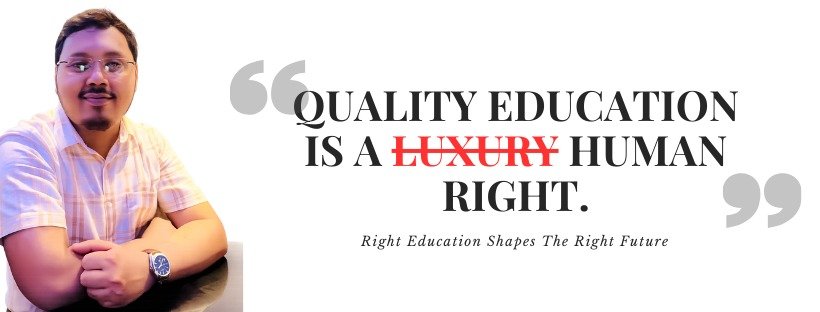
Dey’s journey into education began not with institutional authority or national recognition, but in local classrooms shaped by familiar challenges—exam-centric learning, rote memorisation, student anxiety, and a widening gap between curriculum and real-world relevance. Over more than a decade of teaching, these experiences shaped an approach that prioritises conceptual clarity, application-based learning, and learner well-being, aligning closely with the direction outlined by the NEP.As the founder of Robin’s Classes, Dey has worked with thousands of students across school boards and competitive examinations through both classroom-based and personalised online formats. The significance of this engagement lies less in scale than in method: an emphasis on understanding over memorisation, problem-solving over repetition, and confidence over fear—reflecting a broader shift toward competency-based learning now central to India’s education reforms.The COVID-19 pandemic further accelerated this transformation, revealing both systemic gaps and the capacity of technology to sustain learning without replacing the human core of teaching. In Dey’s view, technology is no longer a contingency for emergencies; it has become an integral part of modern education. When used responsibly, it can reduce inequality, support personalised learning, and extend quality education. Central to Dey’s educational philosophy is a simple conviction: right education shapes the right future. He views education as more than degrees or rankings, arguing that it must foster independent thinking, ethical responsibility, resilience, and the ability to apply knowledge meaningfully. Teaching, in this sense, is a formative process that shapes character alongside competence. He often describes teachers as ordinary individuals entrusted with extraordinary responsibility—professionals who understand student motivation and vulnerability, adapt to evolving technology without losing human connection, and measure success not merely by results, but by the confidence and curiosity students carry forward. This perspective reflects a broader global shift toward holistic education.
Recognition has followed sustained practice, though it remains secondary to the work itself. Dey holds a Master’s degree with a Gold Medal for academic excellence and professional certification in 21st-century teaching practices. His work has also been acknowledged through select national and international teaching assessments, including a Top 200 rank in the International Science Teachers’ Olympiad and the Guru Samman Award conferred in association with AICTE and the Ministry of Education. These recognitions serve primarily as validation of long-term classroom engagement rather than its defining focus.More importantly, his work reflects a broader engagement with structural challenges facing Indian education today—persistent exam stress, uneven access to quality learning, teacher-student disconnect, and the risk of education becoming overly profit-driven. While the NEP presents a comprehensive roadmap, Dey emphasises the importance of continuous review, ethical implementation, and inclusivity. India’s diversity, he argues, demands an education system that balances national coherence with local context—unity without uniformity.
On National Education Day, reflecting on Prime Minister Narendra Modi’s call for a self-reliant and globally respected Indian education system, Dey echoed a view shared by many educators: that India’s progress depends on strengthening institutions at home rather than sending aspirations abroad. When classrooms encourage innovation, ethical thinking, and curiosity, education becomes both accessible and aspirational—capable of supporting domestic talent while gradually attracting learners from across the world.Looking ahead, his vision for the coming decades emphasises long-term thinking over short-term gains. Decisions—whether in classroom design or policy implementation—must consider distant consequences before immediate benefits. Education, in this sense, is a moral and social responsibility, not merely an administrative function. Dey’s journey illustrates how educators can become national contributors through consistent practice rather than public prominence. As India’s education story continues to unfold, it is increasingly being written not only in policy documents, but in classrooms where learning is approached with patience, clarity, and empathy. This is where the future of Indian education is quietly—and necessarily—taking shape.