


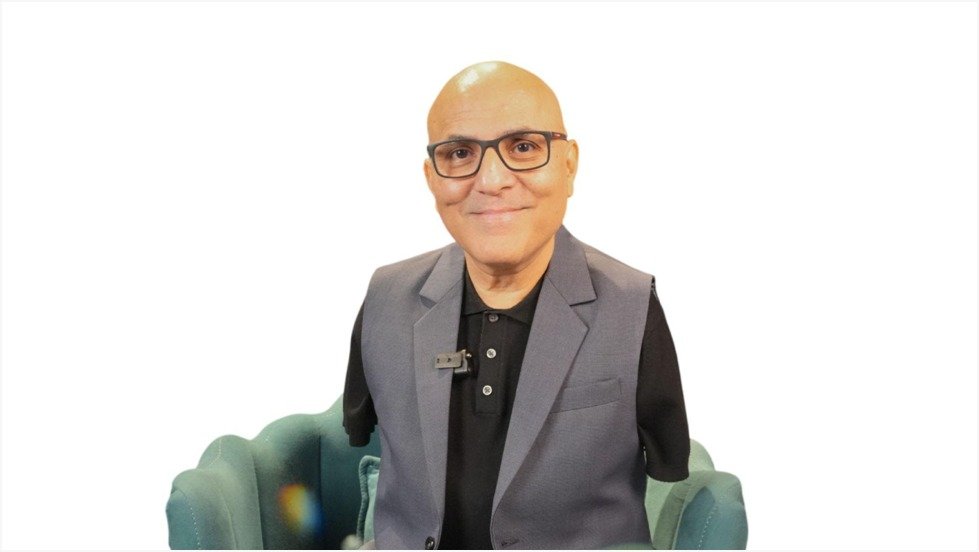
Dr. Vikram Agnihotri explains why inaccessible infrastructure, workplaces and technology are not just social challenges but economic barriers holding India back.
India is building faster highways, smarter cities, modern workplaces and an increasingly digital economy.
But amid this rapid development, an important question remains unanswered: How much economic potential are we losing because millions of Indians cannot access the opportunities being created?
For persons with disabilities, something as ordinary as entering an office, travelling independently or accessing an online service can become an unnecessary challenge.
And when accessibility becomes a barrier, the consequences extend far beyond inconvenience.
They affect education, employment, productivity, financial independence and ultimately, India’s economic growth.
The Economic Cost of Exclusion
According to the United Nations Development Programme (UNDP), a disability-inclusive economy is not merely a social responsibility but an economic necessity. Citing an Impact Future Project report, UNDP highlighted that India’s failure to build an inclusive economy could cost the country over $210 billion.
This represents a significant warning about the economic consequences of exclusion.
The problem is not necessarily a lack of talent or ambition among persons with disabilities.
Often, it is the absence of systems that allow that talent to participate.
An inaccessible workplace can prevent a qualified candidate from accepting employment. Poorly designed public transportation can restrict access to education and professional opportunities. Inaccessible digital platforms can exclude potential customers, entrepreneurs and professionals.
Every such barrier represents an opportunity lost.
When Infrastructure Determines Independence
For Dr. Vikram Agnihotri, an entrepreneur, disability-inclusion advocate and professional rally driver who lost both upper limbs during childhood, independence has been a lifelong pursuit.
Having learned to perform everyday activities and drive using his feet, he understands that physical limitations do not automatically determine an individual’s capabilities.
However, his journey also highlights a larger reality: determination alone cannot compensate for inaccessible systems.
“When a person with a disability is unable to access education, employment or transportation, we must ask whether the limitation lies with the individual or with the environment we have created. Accessibility is not an expense; it is an investment in human potential.” — Dr. Vikram Agnihotri
The economic implications become clearer when accessibility is viewed through this perspective.
An accessible railway station is not merely a convenience. It can connect someone to employment.
An inclusive workplace is not simply fulfilling a diversity commitment. It is accessing talent that might otherwise remain excluded.
An accessible digital platform is not just a technical improvement. It is opening services and markets to more people.
India’s Accessibility Challenge Goes Beyond Buildings
India’s Rights of Persons with Disabilities Act, 2016 establishes accessibility requirements covering physical infrastructure, transportation, information and communication technology.
The Accessible India Campaign also focuses on improving accessibility across these essential areas.
Yet the challenge is not limited to constructing ramps or modifying buildings.
True accessibility requires businesses, educational institutions, technology developers and policymakers to consider different human needs from the beginning.
For example, a company may introduce digital recruitment processes to improve efficiency. But if those systems are incompatible with assistive technologies, qualified candidates may be excluded before receiving an interview.
Similarly, a modern commercial building may offer advanced facilities while remaining difficult for some individuals to navigate independently.
Development cannot be measured by infrastructure alone. It must also be measured by who can use it.
Accessibility Must Become an Economic Priority
As India works towards becoming a developed economy by 2047, accessibility deserves a central place in conversations about infrastructure, employment and innovation.
Businesses should conduct accessibility audits, improve inclusive hiring practices and ensure digital services accommodate diverse users.
Urban planners must prioritise accessible transportation and public spaces.
Educational institutions should create environments where disability does not unnecessarily restrict learning opportunities.
Most importantly, accessibility should be incorporated during the design stage rather than treated as an expensive correction later.
India does not lack capable people.
What it cannot afford is to keep capable people outside the economy because the systems around them were designed without considering their participation.
The real cost of inaccessible India is not simply the money required to fix poor design. It is the talent, productivity, innovation and economic opportunity we lose every day by leaving people behind.
About Dr. Vikram Agnihotri
Dr. Vikram Agnihotri is an Indore-based entrepreneur, author, keynote speaker, professional rally driver and disability-inclusion advocate. Having lost both upper limbs during childhood, he has dedicated his work to promoting independence, equal opportunities and a more inclusive society.