


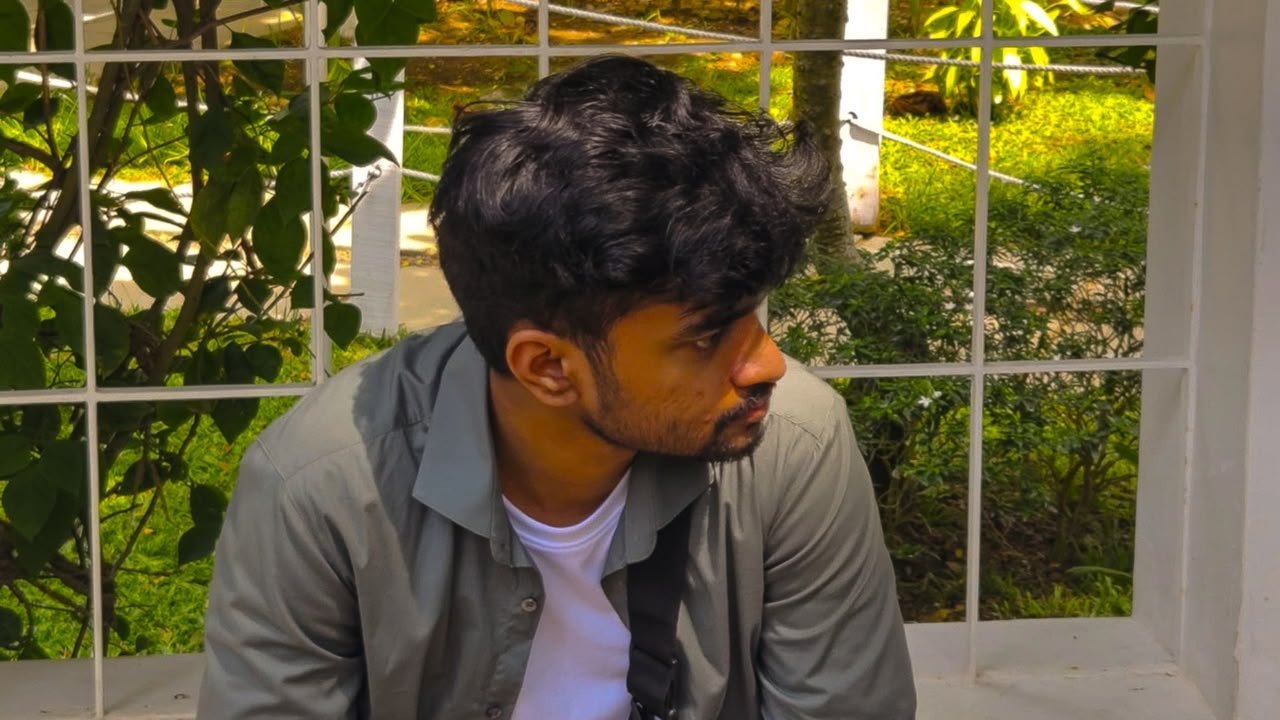
Most people are taught to think of a life as a sequence: a plan, a timeline, a series of milestones reached roughly on schedule. Far fewer are told what to do when the sequence breaks. Akhin Abraham learned the answer to that question earlier than most, and he has spent the years since turning it into a book, a growing set of digital products and a working philosophy built around a single idea: that beginning again is not a step backwards.
Akhin Abraham is an author, entrepreneur and product builder from Kerala, India. He is young, and he is careful not to pretend that he has everything worked out. His first book, The Art of Starting Again: Lessons For Anyone Rebuilding Their Life, was self-published in 2026, and it was not written from the far side of difficulty. It was written in the middle of it. That distinction runs through everything he makes, from the book to the apps to the ventures he is still shaping.
A Diagnosis at Sixteen
At sixteen, Akhin was diagnosed with Crohn’s disease. At that age, the news felt like the end of the world. Life seemed to keep moving downward, and he found himself navigating uncertainty far earlier than he had expected to.
This is not a medical story, and he does not treat it as one. What matters is what the experience did to his sense of how a life is supposed to unfold. The years that followed brought several challenges and setbacks, and he does not describe them as a tidy climb from hardship to success. He is wary of that version of events, which tends to flatter the ending and quietly erase the middle.
What he did instead was keep going. He did not wait for life to become perfect before deciding to move forward, and that decision, repeated through uncertain periods, became the foundation for everything he has built since. Resilience, as he understands it, is not the absence of struggle. It is the refusal to stop becoming.
A Different Definition of Progress
Young people are often handed an unspoken schedule: know what you want by a certain age, choose a career, show steady evidence of progress, and measure yourself against everyone moving along the same track. Having seen how quickly a life can leave its expected course, Akhin came to question whether that schedule was ever a reliable measure of anything.
His alternative is quieter. Progress, in his view, is not a race against somebody else’s timeline. Small steps matter. A person can change direction without becoming someone else, and can make real progress while still feeling uncertain. Underneath it sits a conviction about character: that hardship may shape what happens to a person, but it need not decide who they become.
Akhin’s conviction is captured in a line of his own: “The world may be evil, but you don’t have to be.” It is a statement about kindness and personal responsibility as much as endurance, and it explains why his work, whatever its form, is consistently aimed at helping rather than impressing.
A second idea sits close to the first. Difficult periods, Akhin believes, do not only take time from people; they take their sense of themselves. In his words: “You have a bad memory. You just forget who you are and what you are capable of.” The line is his own, and it is the nearest thing his book has to a thesis. Starting again, in this reading, is less about inventing a new self than about remembering the one that was always there.
The Builder Behind the Ideas
Akhin’s background is in mobile application development and computer applications, a technical foundation that sits alongside his writing rather than apart from it. He enjoys turning ideas into digital products and building tools that solve practical problems.
Steady, his habit-tracking application, is designed to help people build and maintain habits. It has recorded more than 750 downloads and a 4.6-star rating. Doable, a task-management project, has earned more than 100 stars on GitHub, a modest but real signal of interest in the practical productivity tools he likes to make. Dawnly, a focus and productivity application, extends the same interest.
His experience also includes work with Eaidex, a platform focused on connecting people with skilled labourers for job opportunities. Fayvel, meanwhile, represents the larger frame around these efforts: his entrepreneurial vision and company-building journey. It is best understood as an ambition still taking shape, a desire to build something larger than any single product, rather than as an established business.
Alongside the software sits writing and storytelling. Akhin creates content about life, identity, uncertainty, personal growth and the experience of navigating your twenties. He does not present himself as a motivational authority. His approach is that of a storyteller who uses personal experience and observation to explore questions many people carry quietly.
Taken together, the pieces share a logic. The apps, the ventures, the book and the stories are different expressions of the same impulse. Akhin does not only want to talk about ideas. He wants to build them.
Writing While Rebuilding
The Art of Starting Again began with a frustration about how success is defined. Akhin wanted to challenge the belief that people must have their lives figured out by a certain age, and the pressure that comes with it: follow a conventional timeline, reach the expected milestones, and keep demonstrating progress. He wanted to write about something else, namely what it means to rebuild, to question expectations, to understand yourself, to accept uncertainty and to continue anyway.
The book draws on his personal experiences and on the philosophy he has developed while moving through them. Its central ideas are straightforward. As long as you are alive, you can start again. Starting again is not the same as going backwards. You do not need your whole life mapped out before taking the next step, and your circumstances do not have to determine your future. Growth is not a race, you are allowed to change direction, and progress remains possible even when certainty is not.
The most important feature of the book may be the circumstances of its writing. Akhin did not write it after fixing his life. He wrote it while fixing his life. That makes it a different kind of book from the advice of someone who has arrived: it is the work of a person who is still learning, questioning and rebuilding, which gives its message a credibility that a victory-lap narrative could not.
It is written for readers who feel lost or behind, who are rebuilding after difficult experiences, who struggle with uncertainty or compare themselves with others, who feel the weight of society’s expectations, or who want to start again but do not know where to begin. Its argument, though, is wider than any one group. Most people, at some point, need permission to begin again.
For Akhin, the book is a milestone rather than a destination. It brings his experiences and philosophy together in one place, and it is one part of a much larger creative and entrepreneurial journey.
Beyond Personal Recognition
Akhin’s stated ambition is to build a recognised personal brand with a meaningful audience, but he is explicit that recognition is not the point: “I don’t want my life to be remembered for the fame I get. I want it to be remembered for the change I make.”
In practice, that means a body of work: meaningful products, entrepreneurial ventures, writing and creative projects, and, above all, reaching people who need encouragement to rebuild. His mission is to help people find hope and the courage to start again. The legacy he hopes for is a voice that encourages people to live authentically.
It is worth being clear about where he stands. These are aspirations, not accomplishments. Akhin has not claimed major awards or formal industry recognition, and he does not present his ambitions as achievements. What he can point to is work: a published book, apps in use, a project that other developers have starred, and a growing body of writing and storytelling.
An Ongoing Journey
There is a temptation, in profiles like this one, to end with a prediction of what the subject will become. Akhin Abraham’s story resists it. He is still at the beginning of something larger, writing, building, learning and becoming while life continues to happen.
What he offers in the meantime is a clear idea and the evidence of someone acting on it. He experienced difficult circumstances early, kept rebuilding, found meaning in creating things, and is trying to turn that experience into something that can help other people. Whether in a book, an app or the next venture, the question underneath his work stays the same: what becomes possible when a person stops waiting for the perfect moment to begin? For Akhin Abraham, the answer is still being written.