


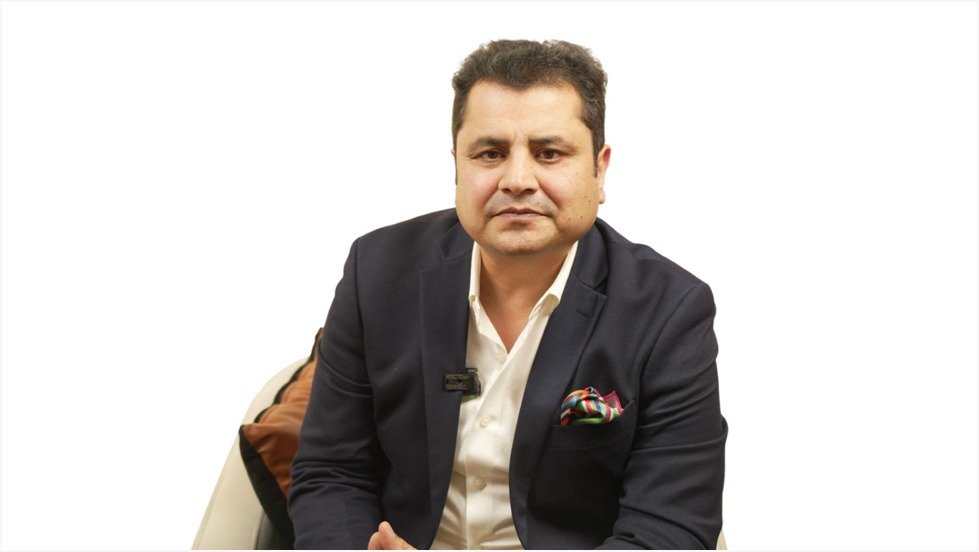
Sachin Raaj Explains Why Artificial Intelligence Alone Cannot Fix India’s Business Growth Challenges
India’s small businesses are embracing artificial intelligence faster than ever, but experts warn that technology without strong business systems may not deliver sustainable growth.
Artificial intelligence is rapidly becoming part of everyday business operations in India. From automating customer communication to creating marketing content and streamlining administrative tasks, micro, small and medium enterprises (MSMEs) are increasingly exploring AI-powered solutions.
Yet a critical question remains: If Indian businesses are becoming more technologically advanced, why are so many still struggling to scale?
A recent study by the Confederation of Indian Industry (CII) and the Indian School of Business (ISB), reported in October 2026, revealed that 65.8% of surveyed MSMEs were using AI tools. However, only 21% reported using enterprise resource planning (ERP) or customised software to manage business operations.
The findings highlight an important distinction between adopting technology and building the operational capabilities required for sustainable business growth.
AI Adoption Is Increasing, but Business Fundamentals Remain Critical
For many Indian entrepreneurs, artificial intelligence represents an opportunity to reduce costs, improve efficiency and compete with larger organisations.
However, implementing AI tools does not automatically address underlying business challenges such as inconsistent sales, weak financial management, unclear employee responsibilities and excessive dependence on the founder.
A business might automate customer enquiries but still struggle to convert leads. It might generate marketing campaigns using AI while lacking a reliable sales process. Similarly, sophisticated reporting tools offer limited value when business owners do not consistently monitor profitability or cash flow.
According to business growth strategist Sachin Raaj, the challenge is not necessarily a lack of technology but a lack of structured business management.
“AI can make your business faster, but it cannot make a broken business model successful. If your sales process is weak, your team lacks accountability, or every decision depends on the founder, automation will only help you repeat those mistakes faster. Before investing in smarter tools, entrepreneurs need to build smarter business systems.”
— Sachin Raaj, Business Growth Strategist
The Founder Dependency Problem
One of the biggest obstacles to scaling an MSME is founder dependency.
In many owner-managed businesses, the entrepreneur remains responsible for sales approvals, customer relationships, recruitment, financial decisions and daily operational challenges.
This structure may work during the early stages but becomes increasingly difficult to sustain as the organisation expands.
Even with AI-powered tools, employees may continue relying on the founder for routine decisions when responsibilities, authority and accountability are not clearly defined.
The solution requires entrepreneurs to transition from personally managing every activity to building processes and teams capable of functioning independently.
Why Technology Must Be Supported by Business Systems
An October 2026 report by Dun & Bradstreet India identified integration, talent, reliability and safeguards among the challenges affecting the long-term value of AI adoption among MSMEs.
These challenges reinforce the need for a more disciplined approach to digital transformation.
For business owners, three priorities deserve attention:
1. Build repeatable processes: Establish clear workflows for sales, operations, customer service and financial reporting before automating them.
2. Strengthen team accountability: Define responsibilities, establish measurable performance indicators and empower employees to make appropriate decisions.
3. Measure business outcomes: Evaluate technology investments through improvements in profitability, productivity, customer retention and operational efficiency rather than the number of AI tools adopted.
The Future Belongs to System-Driven Businesses
India’s MSME sector plays a vital role in employment generation, entrepreneurship and economic development. According to the World Economic Forum, MSMEs contribute nearly 30% of India’s GDP.
Artificial intelligence offers significant opportunities for this sector, but sustainable growth requires more than technological adoption.
For entrepreneurs, the real competitive advantage will come from combining digital tools with disciplined execution, capable teams and well-defined business systems.
The question for Indian MSMEs is no longer simply whether they should adopt AI.
It is whether their businesses are structured well enough to benefit from it.
Because technology can accelerate growth, but only a strong business foundation can sustain it.