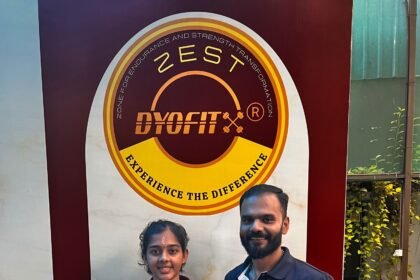



For Shilpkar Narwade, the real story of India’s hiring challenge isn’t told in job portals or hiring dashboards—it’s seen in delayed projects, stretched teams, and missed business momentum.
A recent assignment brought this into sharp focus. A fast-scaling manufacturing company had everything in place—orders, automation investments, expansion plans—except one critical hire: a robotics maintenance lead with hands-on expertise in specific SPM systems. The role stayed open for months. Productivity dipped, internal teams compensated, and growth slowed—not due to strategy, but due to one missing capability.
“That’s when companies realise hiring is not a support function—it’s a business function,” says Shilpkar Narwade, Entrepreneur and Headhunting Expert, and the founder of Mahasurya Ventures India Pvt Ltd.
Narwade’s journey into headhunting was shaped by exactly these gaps. Early in his career, he observed a consistent pattern across industries—engineering, manufacturing, logistics, infrastructure, and even emerging tech companies. Businesses were not struggling to find people; they were struggling to find the right people—those with precise experience, contextual understanding, and the ability to deliver impact from day one.
This insight led to the creation of Mahasurya Ventures India Pvt Ltd, with a clear focus: solving complex hiring challenges through targeted headhunting and executive search.
Unlike conventional recruitment approaches that depend on active applicants, Narwade built his model around passive talent acquisition. The philosophy is simple—high-impact professionals are rarely on job portals. They are already contributing within organisations, and reaching them requires intent, research, and credibility.
“In most niche or leadership roles, the right candidate isn’t applying anywhere,” Narwade explains. “You have to identify where they are, understand their journey, and engage them with the right opportunity. That’s where real hiring begins.”
At the core of his approach is talent mapping—breaking down roles beyond job descriptions and identifying where such capabilities exist across industries. This often means looking beyond obvious talent pools and exploring parallel ecosystems where transferable expertise resides.
In one case, a logistics company was struggling to hire a senior operations leader who could balance on-ground execution with digital transformation. Months of hiring produced candidates strong in one area but lacking in the other. Narwade approached the problem differently—mapping adjacent industries where similar scale and complexity existed.
The eventual hire came from outside the immediate sector but brought the exact blend of experience required.
“In many cases, companies are searching in the wrong places,” he notes. “The talent exists—but not always where you expect it.”
A defining principle in Narwade’s work is quality over volume. Instead of presenting multiple profiles, the focus remains on identifying high-fit candidates—those who align technically, contextually, and culturally. This reduces hiring cycles and improves decision-making, particularly for leadership roles where the cost of a wrong hire can be significant.
His work with fast-growing companies has further reinforced the importance of proactive hiring. Rather than waiting for roles to open, Narwade emphasises building leadership pipelines in advance—engaging with potential candidates early to enable faster closures when business needs arise.
“There is a shift happening,” he says. “Hiring is moving from transactional to strategic. The companies that recognise this early will scale faster and more sustainably.”
As industries become more specialised and roles more complex, Narwade believes the gap between traditional recruitment and strategic headhunting will continue to widen. The demand is no longer for resumes—it is for insight, precision, and access to talent that is not readily visible.
Through Mahasurya Ventures India Pvt Ltd, Narwade is positioning himself at this intersection—working closely with businesses to solve hiring challenges that directly impact growth.
Because, as he puts it, “One role may look small on paper—but in reality, it can determine the pace at which a company moves forward.