


By Dr. Vikram Agnihotri
India loves an inspiring story.
A person with a disability learns to drive. Someone builds a career despite physical barriers. Another succeeds in a space where nobody expected them to.
We celebrate their determination, applaud their courage and call them an inspiration.
But perhaps we are asking the wrong question.
Instead of asking, “How did they overcome so much?”, we should also be asking: Why did they have to overcome so much in the first place?
That distinction matters if India genuinely wants to become an inclusive country.
According to Census 2011, the latest complete-enumeration disability data available, India had 2.68 crore persons with disabilities. The Rights of Persons with Disabilities Act, 2016 subsequently created a stronger legal framework around equality and accessibility, including provisions concerning transport, information and communication technology and universally designed products.
Yet inclusion cannot exist only on paper.
It has to exist in the everyday experience of going to school, entering an office, travelling independently, accessing a website, using public infrastructure or simply moving through a city without having to repeatedly ask someone else for assistance.
I understand that distinction personally.
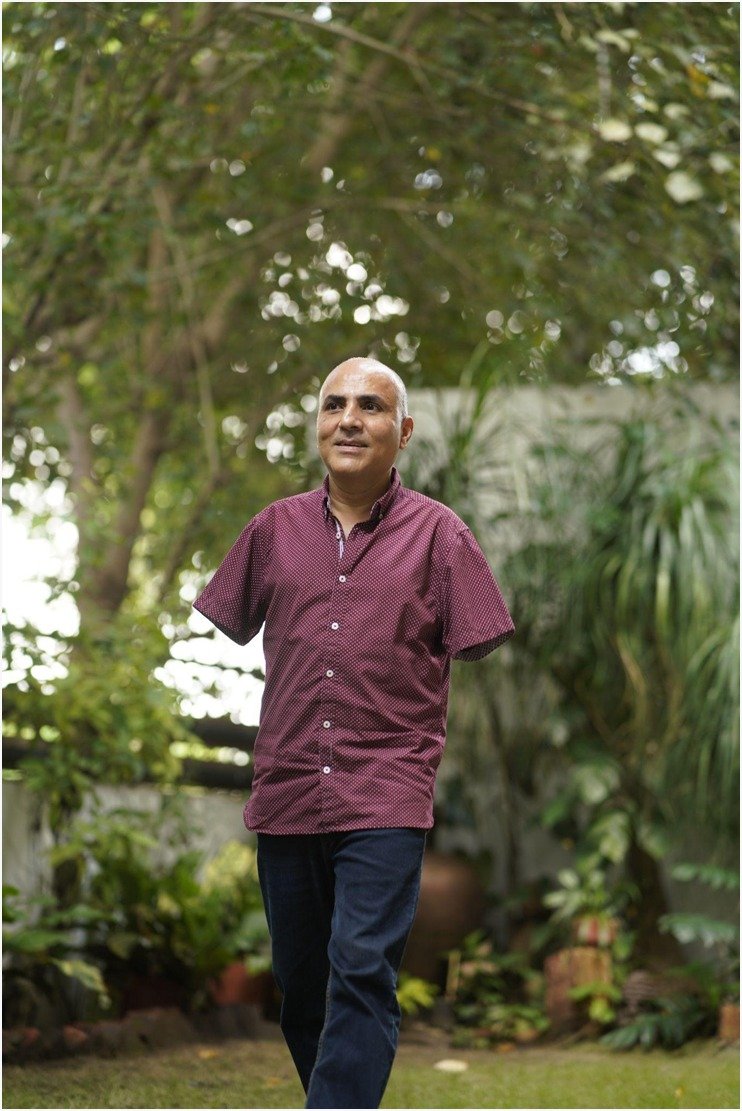
Having lost both my upper limbs as a child, I have spent much of my life learning to do things differently. From everyday activities to writing, using technology and driving, adaptation became part of my life.
But my experience also taught me something important:
Independence is not created by determination alone. It is created when determination meets opportunity and accessible systems.
“I don’t want a person with a disability to be celebrated simply because they managed to navigate a system that was never designed for them. I want us to build systems where their participation feels normal.”
— Dr. Vikram Agnihotri
Accessibility Is Bigger Than a Ramp
When many people hear “accessibility,” they immediately imagine ramps and wheelchairs.
That definition is far too narrow.
Accessibility can mean whether someone can independently use public transport. Whether a digital platform works with assistive technology. Whether an employee can perform a role without unnecessary barriers. Whether educational institutions, banking services, railway stations and other essential systems are designed for different human needs.
India has already developed accessibility standards across several of these areas, including banking, higher education, railways, healthcare, civil aviation and information and communication technology.
The direction is encouraging. The challenge is making accessibility an everyday design principle rather than an afterthought.
We Need to Move From Assistance to Independence
On September 17, 2026, a nationwide government initiative distributed assistive devices worth nearly ₹68 crore to more than 58,000 persons with disabilities and senior citizens across 76 locations in 21 states. The stated objective included improving mobility, independence, dignity and self-reliance.
Initiatives like these matter.
But assistive technology is only one part of independence.
A device can enable an individual. An accessible ecosystem determines how far that individual can go.
That means businesses, educational institutions, technology companies, urban planners and policymakers all have a role to play.
The better question when designing a building, product, workplace or service is no longer:
“How will a person with a disability manage this?”
It should be:
“Why are we designing something they need to struggle to use?”
Accessibility Is Not Charity
Perhaps the biggest change India needs is not architectural or technological. It is conceptual.
Accessibility should not be viewed as a favour extended to persons with disabilities.
It is infrastructure.
And inclusion should not mean making exceptions after someone encounters a barrier. It should mean removing unnecessary barriers before they encounter them.
There will always be extraordinary stories of resilience, and those achievements deserve recognition.
But the true measure of an inclusive India will not be how many extraordinary stories about disability we can celebrate.
It will be how ordinary we can make independence.
Dr. Vikram Agnihotri is an author, entrepreneur, keynote speaker, disability-inclusion advocate and professional rally driver. His work and public advocacy focus on independence, accessibility and expanding opportunities for persons with disabilities.