


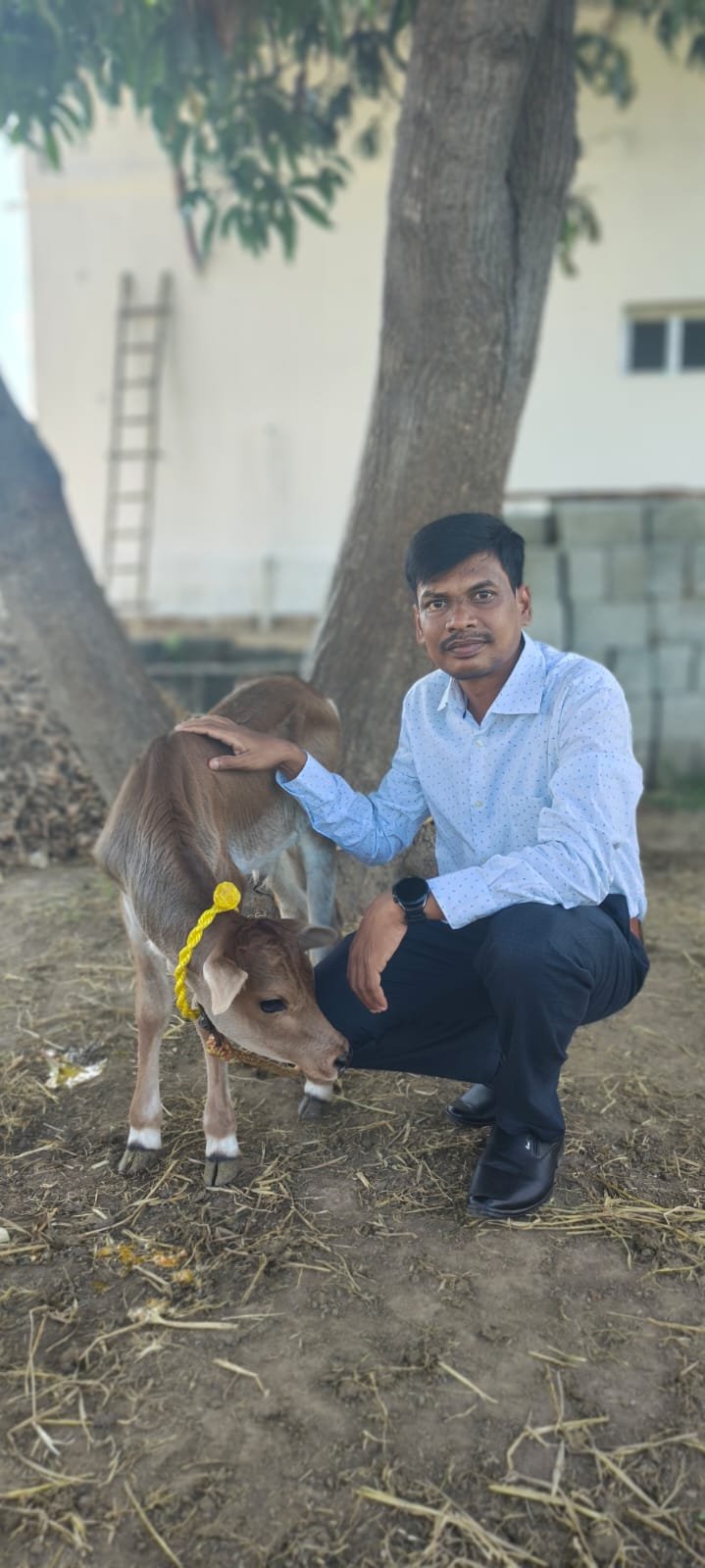
By Dr.Rajasekaran Samykan
Founder & CEO, Algaven PhycoGen Private Limited
DPIIT-Recognised Startup | “Where Biotech Meets Botanical”
The Crisis Is Not Environmental Alone — It Is Structural
The 21st century is defined by paradox.
We are capable of deploying artificial intelligence at scale, constructing smart cities, and advancing space exploration — yet we continue to struggle with malnutrition, soil degradation, water scarcity, and biodiversity collapse.
The sustainability conversation has expanded globally. However, much of it remains reactive — focused on campaigns, offset mechanisms, and temporary interventions. The deeper issue is not the absence of awareness.
It is the absence of system redesign.
Climate instability, nutrient deficiency, extractive agriculture, and waste-heavy industrial models are interconnected outcomes of fragmented economic structures. Addressing them independently will not deliver meaningful transformation.
What we require is integration.
From Entrepreneurial Banking to Bio-Innovation Leadership
My professional journey began in banking, where I spent over 15 years understanding capital systems, financial flows, and economic risk. Transitioning into biotechnology and sustainable innovation was not a departure from finance — it was a response to what I saw within it.
Capital alone does not create resilience.
Design does.
As Founder of Algaven PhycoGen Private Limited — a DPIIT-recognised biotech startup — I have focused on building integrated biological systems that align nutrition, agriculture, and environmental responsibility.
This work has been recognised internationally, including:
Innovative Startup of the Year – International Prestige Awards 2025
Best Startup – Bio Innovation for Agriculture – Global Leadership Awards
Sustainability & ESG Excellence Award – Entrepreneur Summit & Awards (Asia Pacific)
These recognitions are not personal milestones; they validate a broader principle — sustainability must move from theory to operational architecture.
Reframing Sustainability Through Bio-Systems
At Algaven, our guiding philosophy is simple:
“Where Biotech Meets Botanical.”
This reflects a belief that technology and ecology are not opposing forces. When integrated responsibly, they create regenerative systems.
- Algae as a Climate-Resilient Nutrition Model
Microalgae such as spirulina represent one of the most resource-efficient biological platforms available today.
Compared to conventional protein sources, algae cultivation requires:
Significantly less land
Lower water intensity
Faster growth cycles
High nutrient density per unit area
By investing in controlled spirulina production and value-added algal extracts such as phycocyanin, we are addressing both micronutrient deficiencies and environmental footprint reduction simultaneously.
This is not merely a superfood narrative.
It is a decentralised nutrition strategy for climate-constrained futures.
- Controlled Environment & Vertical Agriculture
Traditional agriculture faces intensifying stress from erratic rainfall, soil depletion, and supply chain inefficiencies.
Controlled Environment Agriculture (CEA) and vertical farming offer:
Precision nutrient management
Reduced pesticide reliance
Year-round production cycles
Urban proximity to consumers
Reduced post-harvest loss
Sustainability in food systems must prioritise efficiency per square metre — not expansion per hectare.
Urban-integrated production models reduce transportation emissions and enhance freshness while strengthening local food resilience.
- Circular Economy: Designing Out Waste
Modern industry often treats waste as an unavoidable by-product. Regenerative design treats it as a resource.
Our work integrates:
Agricultural residue valorisation
Plant-based functional powders
Waste-to-wealth product innovation
Bio-input development for eco-friendly agriculture
A linear system extracts and discards.
A regenerative system converts and reuses.
The difference is intentional design
The ESG Imperative: Beyond Reporting to Responsibility
Environmental, Social, and Governance (ESG) frameworks have brought accountability to corporate discourse. Yet reporting alone cannot solve ecological breakdown.
ESG must evolve from compliance metrics to operational transformation.
That means:
Integrating bio-based raw materials into supply chains
Reducing resource intensity at production stage
Investing in decentralised nutrient systems
Embedding ecological thinking into business architecture
Sustainability must be engineered — not advertised.
Faith, Ethics, and Ecological Responsibility
While biotechnology provides tools, sustainability ultimately requires ethical alignment.
Through my work in eco-theology and environmental ethics, I advocate that stewardship must accompany innovation. Technological capability without ecological consciousness risks repeating the extractive patterns we seek to correct.
Sustainability is not only a scientific responsibility.
It is a moral one.
The Future Belongs to System Designers
The defining leaders of the next decade will not be those who produce the most — but those who design the most responsibly.
We must move:
From charity to structure
From awareness to architecture
From extraction to regeneration
The climate crisis, food insecurity, and resource depletion are interdependent challenges. Solutions must therefore be integrated.
At Algaven PhycoGen Private Limited, we view sustainability not as a marketing identity, but as a systems commitment.
The question is no longer whether we can innovate.
The question is whether we can redesign in time.
The era of reaction is ending.
The era of regenerative design has begun.